On this page

“It’s hard to put into words why these Seeing Eye Dogs are so important to me, but at the end of the day, it’s really about independence, and that’s something I cherish,” Kate says.

From 1974 to 2026, Kate Watkins has been with Seeing Eye Dogs for 52 years. Over half a century of partnership with eight Seeing Eye Dogs who have all been there through the milestones of her life; young adulthood, motherhood, the growing of her children, to the birth of her two grandchildren. Kate remembers every name, every birthday and every date of passing of every Seeing Eye Dog.

“Every Seeing Eye Dog is different. I’ve had four girls and four boys, Labradors, Golden Retrievers, and a mix of the two. I've had them all,” Kate says. “My first Seeing Eye Dog was as stubborn as anything, but she taught me so much about being a handler. You never stop learning.”

Kate was born blind due to a unique mix of factors, inheriting a congenital eye condition from her mother that weakened her eyes, and simultaneously contracting the same virus that had blinded her father when he was two. The virus exploited the genetic vulnerability of her vision, and together, the two conditions resulted in her being totally blind.

A week after finishing her year 12 exams in 1974, Kate applied for her first Seeing Eye Dog at what was then known as the Lady Nell Seeing Eye Dog School, where her father had worked. Troika was her first Seeing Eye Dog, who was there for the birth of her children. Then came Abbey, who was a gentle girl perfectly suited for her young children. Letice was next, a big girl who grew up alongside Kate’s children. After that came Quarry, Qiana, Selwood, Clayton and now Kramer, all unique.


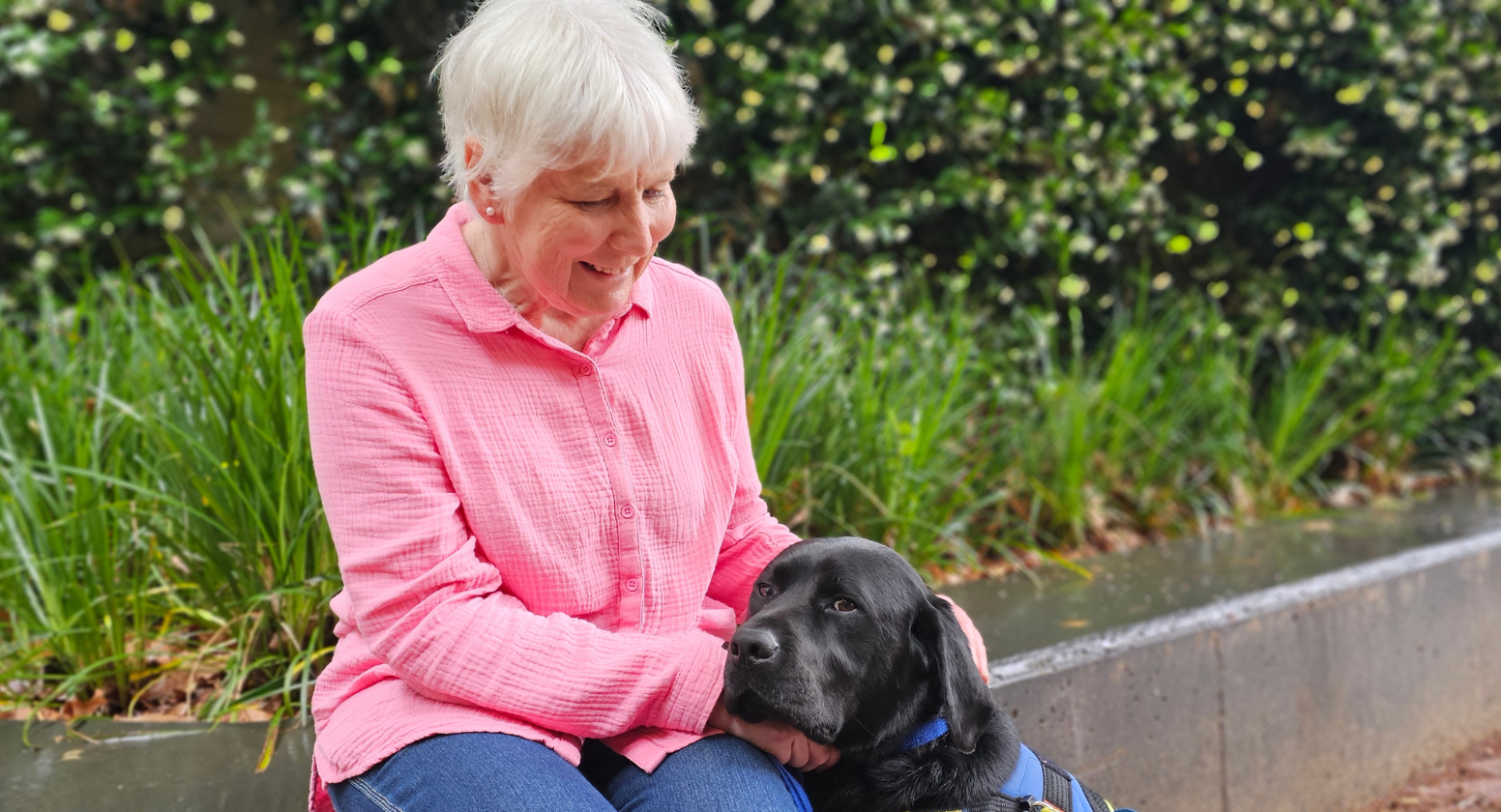
Seeing Eye Dogs client, Kate, sits next to her black Labrador Seeing Eye Dog, Kramer. She sits in front of some greenery in a pink shirt and smiles down at Kramer. 
Seeing Eye Dogs client, Kate, with her Seeing Eye Dog, Kramer.

“Every dog is different; every dog has a different level of understanding or ability. For Kramer, it’s his ability to remember that shines. Once he does something once, he just does it, and he’s very good at what he does. I get these Seeing Eye Dogs because I know they’re reliable, and I know that a lot of time has gone into training them, and it’s my job to keep that up,” she explains.

At 70 years old with Kramer by her side, Kate is still working for Vision Australia and volunteers for Seeing Eye Dogs. She’s a mother, a grandmother, an avid reader and camper, and there are no signs of her slowing down any time soon, something she thanks her Seeing Eye Dogs for.

“Life without my Seeing Eye Dogs would be difficult. I’m not a cane user, I hate running into things, and that never happens with a Seeing Eye Dog. I can be like every other person in the community. I have the choice of asking for help if I need it, but I don’t have to ask for it. It’s a really nice feeling,” Kate says.

“I often walk along and chat to Kramer. He’s the most gentle, quietest boy who loves people to bits. He’s our little boy and the loveliest dog, but he’s also such a great worker,” Kate continues.

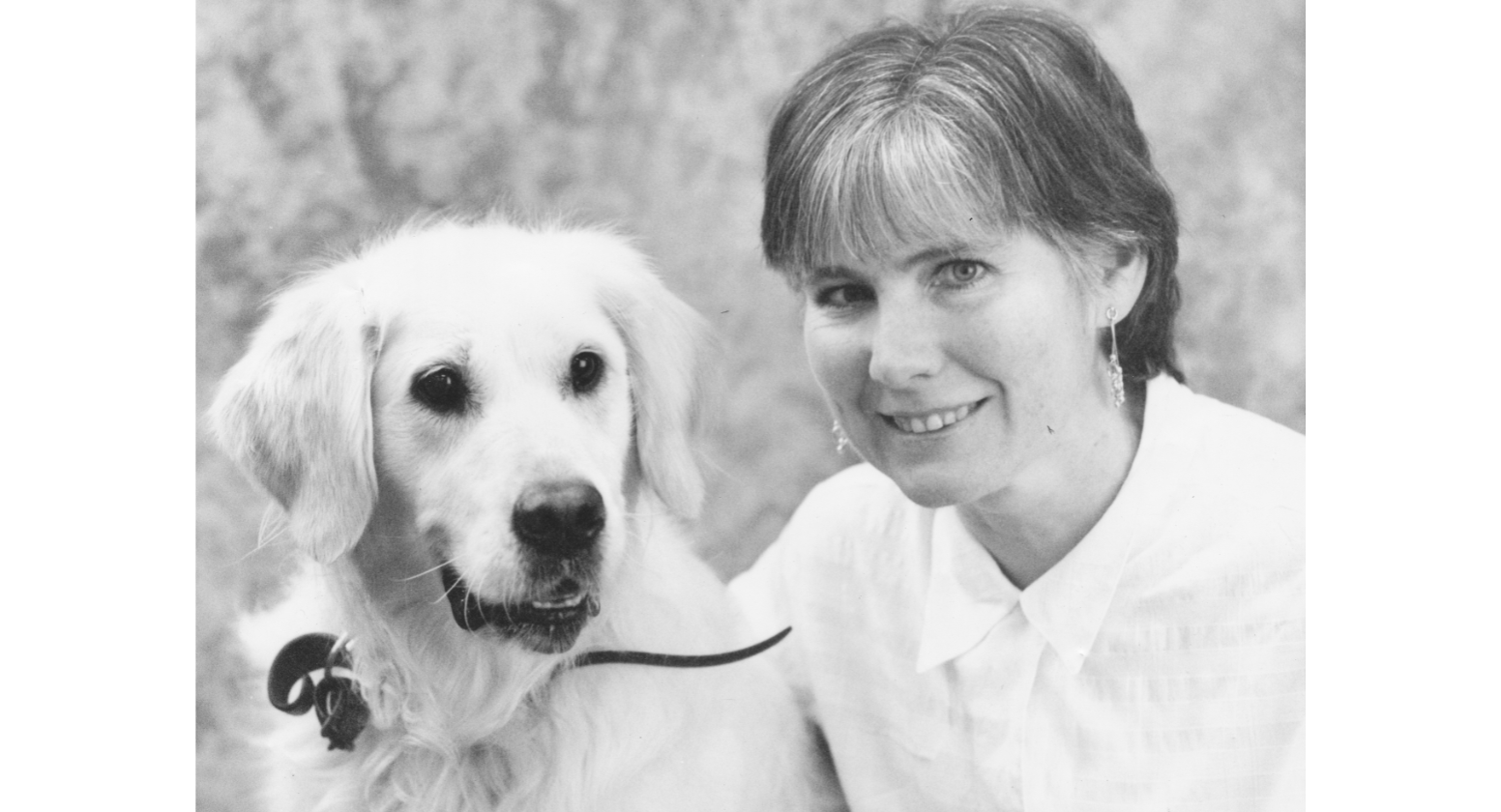
A black and white image of Seeing Eye Dogs client, Kate, next to one of her previous Golden Retriever Seeing Eye Dogs, Le Tisse, and smiles at the camera.
Seeing Eye Dogs client, Kate, with one of her past Seeing Eye Dogs, Le Tisse.

Reflecting on the profound difference her Seeing Eye Dogs have made in her life, Kate encourages everyone to get involved and remain curious during this year’s Petbarn Foundation Seeing Eye Dogs Appeal.

“If you see someone with a Seeing Eye Dog, ask them about it. Ask them why that Seeing Eye Dog is so important and what it means for them. I’m sure they’ll tell you just how precious they are.”

Help us train up a pup this July!

Show your support for the Petbarn Foundation Seeing Eye Dogs Appeal by donating in store or online.