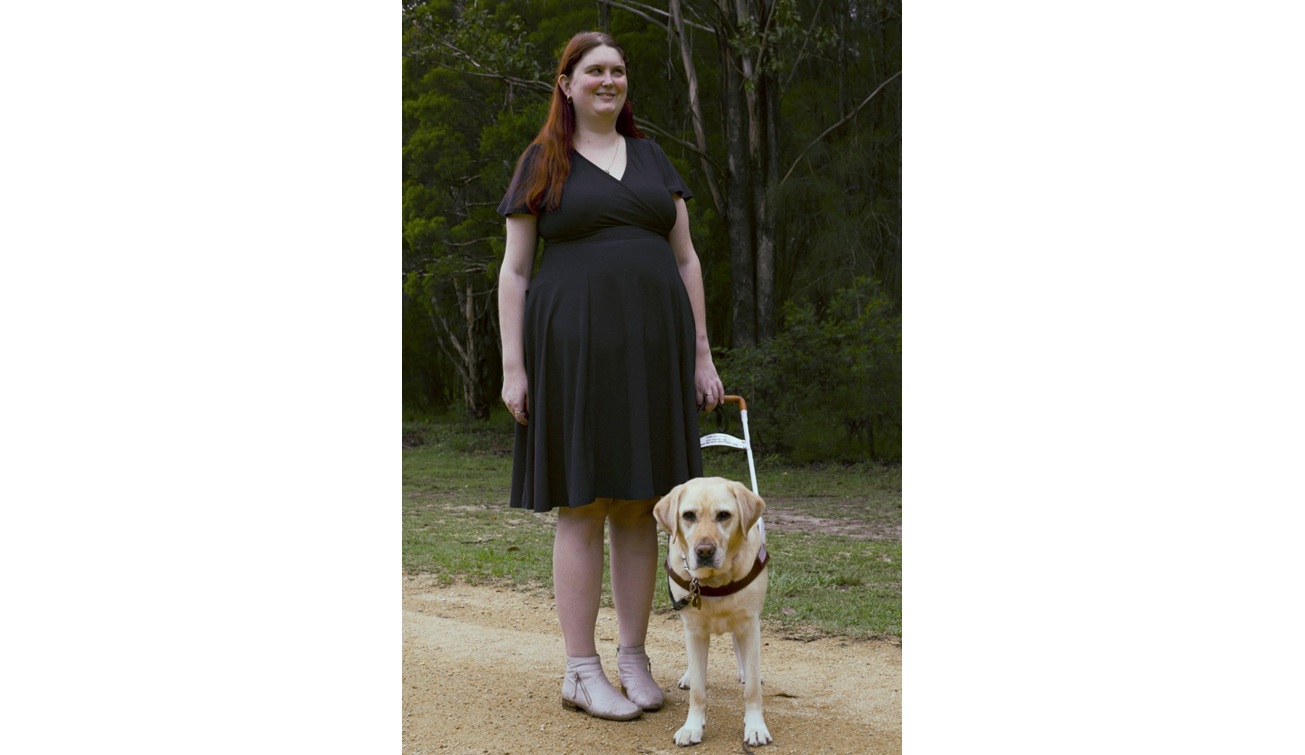
It’s not only the performing world where Kimba shows her worth, with the Seeing Eye Dogs also a big part of Kirsten’s ability to succeed at work and in her studies.
“Before my first dog I did use a cane, but with a cane I found that if you haven’t been to a place multiple times it’s really difficult to feel comfortable about navigating and with how active my life is that just wasn’t an option for me,” she said.
“I’m back at uni doing my second degree and doing that along with singing and working just wouldn’t be possible for me without Kimba.
“There’s been times where I haven’t been able to use Kimba for whatever reason and when that’s over it’s just such a relief that I can use her again.”
Work for Kirsten is especially important, given that her role in the Vision Australia transcription team has a positive impact on other people who are blind or have low vision.
“I’m a bit of jack of all trades proofreader making sure that materials we produce in accessible formats are correct and what our clients need.
“When we get feedback from a client about how we’ve been able to help them overcome not being able to access information is a real dopamine rush from knowing that you’ve really helped someone.”