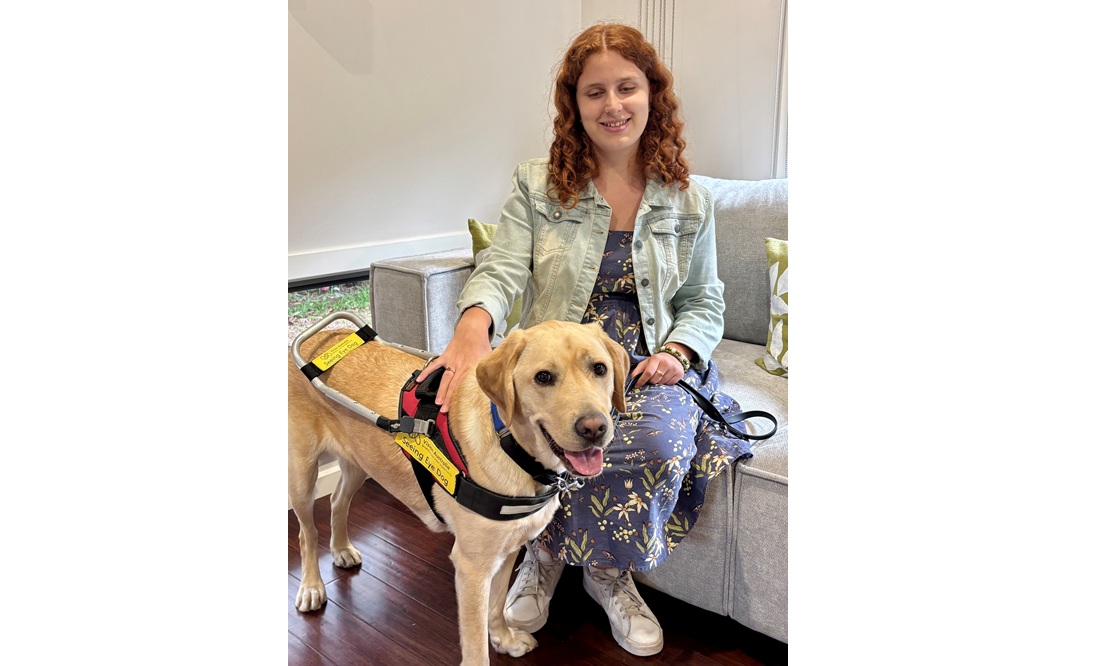
Like many people her age, Lilly is getting ready for another year at university, but this time the 18-year-old will have a special companion by her side when she’s on campus.
Lilly was born blind and after navigating her surrounding with a white cane, she was matched with Teddy, her first Seeing Eye Dog, in November 2025.
While she has always been an active and independent young person, being matched with Teddy has made traveling easier than ever for Lilly.
“We haven’t been matched for too long, but it’s been really good so far,” Lilly said.
“Being on a break from uni has been a great time to start working together. I’ve always been someone who is pretty active and independent, but I’ve definitely noticed that Teddy’s making it quicker and easier for me to get around,” she said.
“I’ve even got a different route that I’ll be able to take to uni now which is good.”
Lilly had strong orientation and mobility skills before Teddy, she was motivated to get a Seeing Eye Dog due to how others in the community were treating her.
“The big thing for was the community reaction I was getting when I was out in public. People would think they’re being helpful and come up to me and grab me when they saw me with my white cane.
“That’s something that nobody would enjoy, so I wanted something that would help me navigate, but also show the rest of the community that I was capable of being out and about by myself.”